Best Drones for Real Estate Photography (2026): Top Picks for Photos & Video
Dipon | January 2026
Table of Contents
- Quick Picks (TL;DR)
- How We Chose
- Comparison Table
- DJI Mini 5 Pro — Best compact upgrade with professional features
- DJI Mini 4 Pro — Best for beginners and light compliance
- Autel EVO Nano+ — Best budget alternative (non-DJI ecosystem)
- DJI Air 3S — Best for the all-around real estate workhorse
- Autel EVO Lite+ — Best for 6K video quality
- DJI Mavic 4 Pro — Best for premium image quality
- DJI Mavic 3 Pro — Best if you find the right deal
- DJI Avata 2 — Best for interior tours and cinematic reveals
- Conclusion
- FAQs
Properties marketed with aerial footage sell significantly faster and generate substantially more inquiries than listings with ground-level shots alone – a pattern consistently reported across real estate photography studies. Aerial content has shifted from a premium add-on to a baseline expectation in competitive markets.
In this guide, we’ve evaluated the best drones for real estate photography across five key categories: image quality, vertical video capability for social reels, obstacle avoidance safety, wind stability, and battery efficiency for multi-listing days. Whether you’re a new agent looking for a budget-friendly entry point or a professional photographer demanding cinema-grade output, we’ll help you choose the best drone for your needs.
If you’re still deciding between drone categories altogether — not just real estate specific models — the complete best drones buyers guide gives you the full picture across every use case and budget.
Best Drones for Real Estate Photography : Quick Picks (TL;DR)
Best overall workhorse: DJI Air 3S
Best compact upgrade for 2026: DJI Mini 5 Pro
Best budget option: DJI Mini 4 Pro
Best budget alternative (non-DJI): Autel EVO Nano+
Best for 6K video quality: Autel EVO Lite Plus
Best premium flagship: DJI Mavic 4 Pro
Best proven pro system: DJI Mavic 3 Pro
Best for interior tours: DJI Avata 2
Affiliate Disclosure
This guide contains affiliate links. Purchases made through these links support Aero Timelapse Studio at no additional cost to you. I only recommend products I personally use or carefully research. As an Amazon Associate I earn from qualifying purchases.
How We Chose
Choosing the best drone for real estate photography isn’t about finding the highest specs – it’s about finding what works on a real listing day, in changing light, with a client waiting for deliverables.
Image quality that handles real estate light. Properties rarely cooperate. Bright sky, shaded facades, and mixed light all appear in the same frame. We prioritized sensors with enough dynamic range to keep both usable — without heavy post-processing.
Vertical video that doesn't require cropping. Social media is now part of every listing workflow. A drone that shoots native vertical 4K saves time and delivers cleaner results than cropping from horizontal footage.
Obstacle avoidance you can trust near buildings. Flying near rooflines, trees, and power lines is the reality of residential real estate work. We weighted obstacle sensing heavily — particularly LiDAR systems that work in low light for golden-hour shoots.
Wind stability that holds up on location. You can't reschedule the weather. A drone that drifts or produces shaky footage in a moderate breeze is a liability on listing day. Stability in real-world wind conditions mattered more than top speed.
Battery life that covers a full property shoot. Landing mid-flight to swap batteries breaks momentum and risks missing the best light. We favored drones with enough real-world flight time to complete wide, medium, and detail passes in a single charge.
EU compliance that simplifies your workflow. Sub-250g drones offer genuine regulatory advantages in Germany and across the EU — fewer licensing requirements, simpler travel, and fewer restrictions near residential areas. Where compliance affects usability, we flagged it clearly.
Ecosystem support that lasts. Batteries die, firmware updates matter, and repairs happen. We considered long-term support availability, accessory ecosystems, and resale value — because the right drone is one you can still rely on two years from now.
Comparison Table
| Drone | Best for | What it delivers for listings | Watch out | Price |
|---|---|---|---|---|
| DJI Mini 5 Pro | Anyone wanting pro quality in a small bag | Clean shadows on dark facades, natural sky detail, native vertical video for Reels — no cropping needed | Pricier than Mini 4 Pro; upgrade only worth it if you edit your footage | Check Latest Price |
| DJI Mini 4 Pro | Beginners or those shooting occasionally | Sharp 4K listing video, easy to carry, simple to fly, good enough for 90% of residential listings | Sky and shadows harder to balance in bright midday light | Check Latest Price |
| Autel EVO Nano+ | Those who want a non-DJI option at budget price | Solid 4K video and 50MP stills for detail shots, compact and compliant | Shorter battery than Mini 4 Pro; smaller support network | Check Latest Price |
| DJI Air 3S | Anyone shooting multiple listings per week | Two cameras in one flight — wide for context, zoom for architectural detail; longer battery covers 3–4 properties | Requires EU drone license; bigger bag space | Check Latest Price |
| Autel EVO Lite+ | Videographers who grade footage seriously | Highest resolution video in this class, adjustable aperture like a real camera lens | Less intuitive app than DJI; thinner repair network | Check Latest Price |
| DJI Mavic 4 Pro | Luxury listings and premium marketing campaigns | 100MP stills sharp enough for print brochures, 6K video for large-screen presentations | More drone than most listings need; high cost to justify on standard properties | Check Latest Price |
| DJI Mavic 3 Pro | Those wanting a proven platform at a lower flagship price | Three focal lengths in one flight, mature platform with wide tutorial and repair support | Older model; compare pricing carefully against Air 3S before buying | Check Latest Price |
| DJI Avata 2 | Interior walkthroughs on high-end properties | Flies through rooms and hallways smoothly — creates the “wow factor” interior tours that photos can’t match | Requires FPV training; not suitable for exterior work | Check Latest Price |
DJI Mini 5 Pro — Best compact upgrade with professional features
Best for:
Photographers upgrading from a Mini 4 Pro or agents who want professional image quality without sacrificing portability and EU compliance.e
Not ideal for:
Pilots who already own a Mini 4 Pro and only shoot bright-day listings, or those wanting to avoid the weight limit edge case (it is 249.9g, technically under the 250g threshold but close).
Key features for real estate
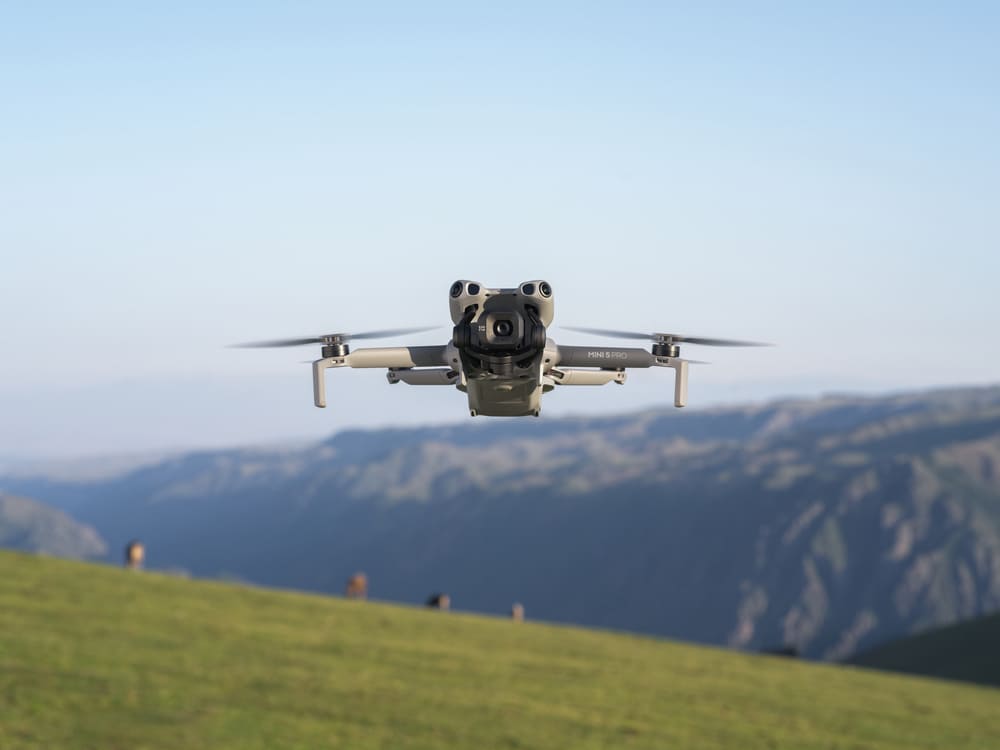
A 1-inch CMOS sensor (50MP) captures significantly more shadow detail and has 14 stops of dynamic range, which is exactly what you need when a property has bright sky and shaded facade. True vertical gimbal supports native 9-by-16 shooting for Reels and TikTok without heavy cropping. 4K at 120fps allows smooth slow-motion and creative timeline flexibility. Forward-facing LiDAR sensor adds nightscape obstacle sensing, which is genuinely useful for twilight golden-hour shoots in tight residential neighborhoods. Flight time stretches to 36 to 52 minutes, so a full listing shoot is feasible on one battery. source: dji
source: mynewsdesk.com
Real world notes
This is the drone I’d buy today if I were starting fresh. The jump from the Mini 4 Pro sensor to the 1-inch CMOS is the biggest single image quality improvement you can make without crossing the 250g threshold and in the EU, that threshold matters.
Recommended settings approach
Shoot in HDR mode for auto-exposure blending. Use 4K at 60fps for standard work, then 4K at 120fps for specific slow-motion hero angles. Always use ND filters in daylight to lock shutter speed and add cinematic motion blur. Bracket exposures or use auto-exposure bracketing (AEB) when sky and building have huge contrast.
Want more detail? Check out our full DJI Mini 5 Pro Review
DJI Mini 4 Pro — Best for beginners and light compliance
Best for:
Agents who want a drone for real estate photos that is simple to carry, quick to launch, and strong enough for modern listing video.
Not ideal for:
Consistent twilight work, heavy wind days, luxury listings where you want maximum dynamic range and cleaner shadow detail, or photographers who prioritize advanced obstacle sensing.
Key features for real estate
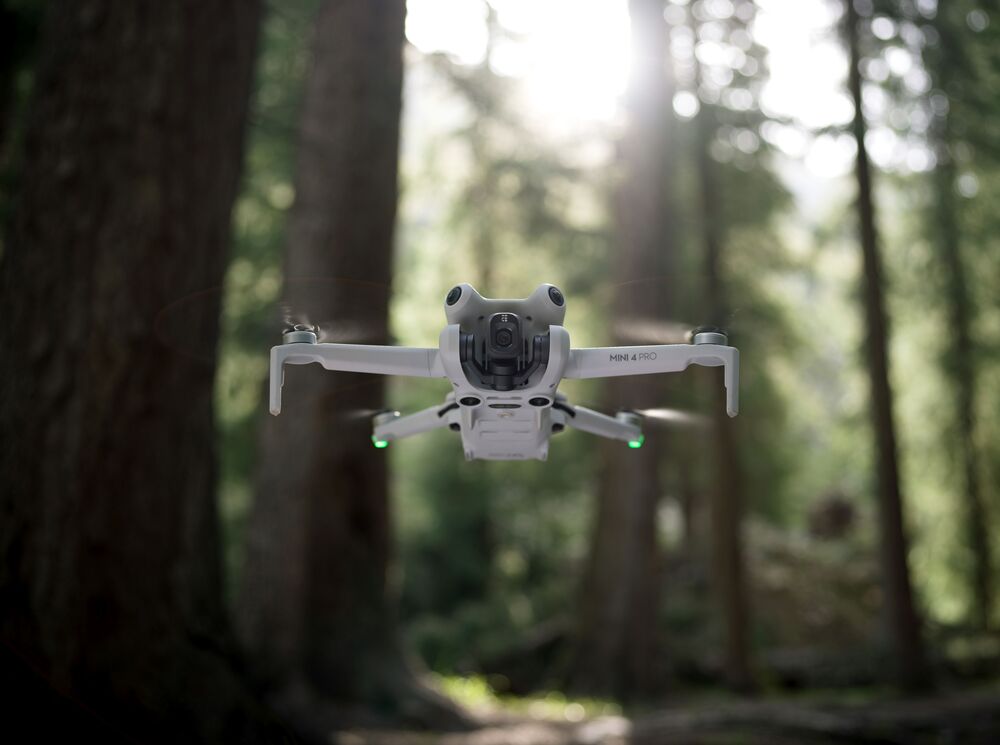
True vertical shooting for reels and social workflows. 4K at 60fps HDR for clean real estate drone video that holds highlights better than basic 4K. Under 249 grams design for easier day-to-day compliance in many EU jurisdictions. 360-degree obstacle avoidance with six fisheye sensors provides solid safety around trees and power lines. 34-minute flight time is practical for most single-property shoots. source: dji
source: mynewsdesk.com
Real world notes
This is the drone I recommend when someone wants results fast without turning every listing into a technical exercise. It is also one of the easiest drones to keep in a small kit bag, which matters when your drone job is a side add-on to a larger photo workflow. The 1/1.3-inch sensor is smaller than the Mini 5 Pro, so dynamic range and shadow detail are more limited, but editing skills can bridge that gap.
Wind handling is solid at 10 meters per second (level 5), so suburban shoots remain stable in typical conditions. Obstacle avoidance works reliably around trees and buildings, giving pilots confidence to frame shots tighter without collision fear.
Recommended settings approach
For stills, prioritize bracketed exposures or HDR-style modes when the sky is bright and the facade is shaded. For video, keep motion calm and slow, then use ND filters when it is sunny so your shutter speed does not get too sharp and jittery. 4K at 60fps gives you timeline flexibility for editing later.
New pilot? Start here first: Best Drones for Beginners (2026) (what to look for, safety features like RTH/obstacle sensing, and a first-flight checklist)
Autel EVO Nano+ — Best budget alternative (non-DJI ecosystem)
Best for:
Agents and photographers who prefer the Autel ecosystem, value compact portability at 249g, and want a capable alternative to DJI’s Mini series.
Not ideal for:
Users wanting the longest flight time, those prioritizing LiDAR obstacle sensing, or pilots wanting maximum dynamic range for mixed-light real estate.
Key features for real estate
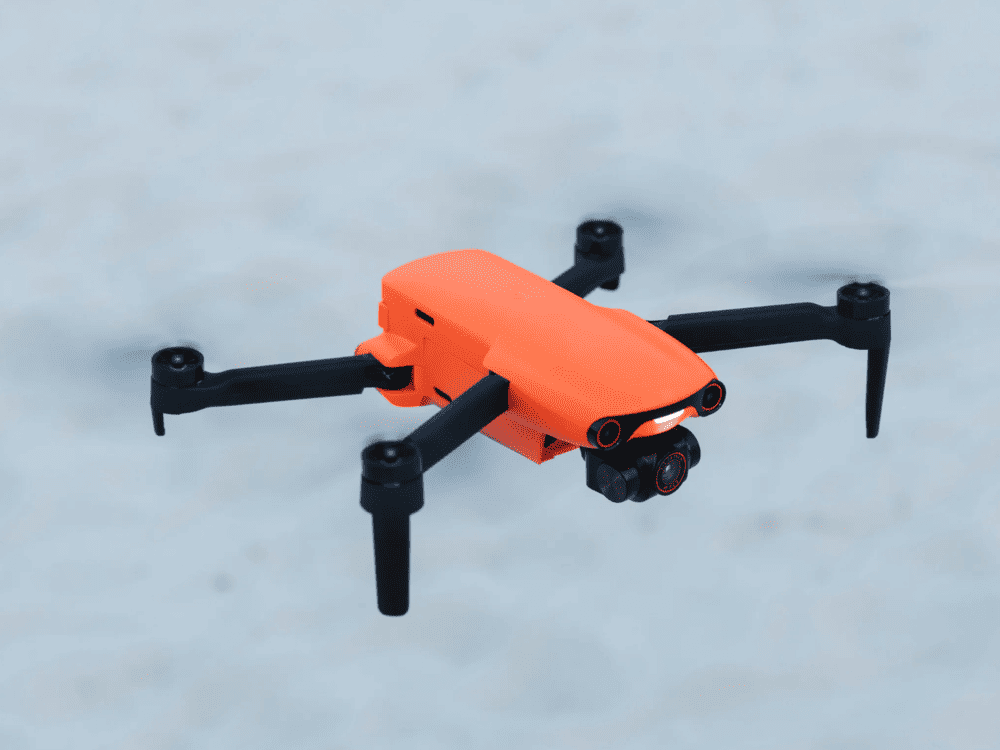
Weighs exactly 249 grams (on the edge of the sub-250g compliance threshold), so EU regulations may treat it like other sub-250g drones depending on local rules. Features a 1/1.28-inch CMOS sensor and captures 50MP stills, which is impressive for the compact class. 4K at 30fps HDR video covers standard listing deliverables. Omni-directional obstacle avoidance across all directions. 28-minute flight time is the main trade-off versus DJI Mini 4 Pro’s 34 minutes. source: droneivo
Real world notes
If you already shoot with Autel cameras or simply want something outside the DJI ecosystem, this is the one I’d point you to. The 50MP stills surprised me for a 249g drone, detail shots hold up well at full resolution.
Recommended settings approach
Use bracketing for mixed-light scenes. 4K at 30fps is your standard, so shoot smooth, deliberate orbits rather than fast pans. ND filters are essential in daylight. Don’t push the wind resistance in gusts above 5 meters per second.
DJI Air 3S — Best for the all-around real estate workhorse
Best for:
The best DJI drone for real estate when you shoot often and need both wide context and tighter compositions without landing to swap anything. This is the true workhorse for agents and small teams.
Not ideal for:
People who only shoot one listing every few months and want the simplest possible compliance path, or pilots unwilling to do formal drone training (724g requires licensing in EU).
Key features for real estate
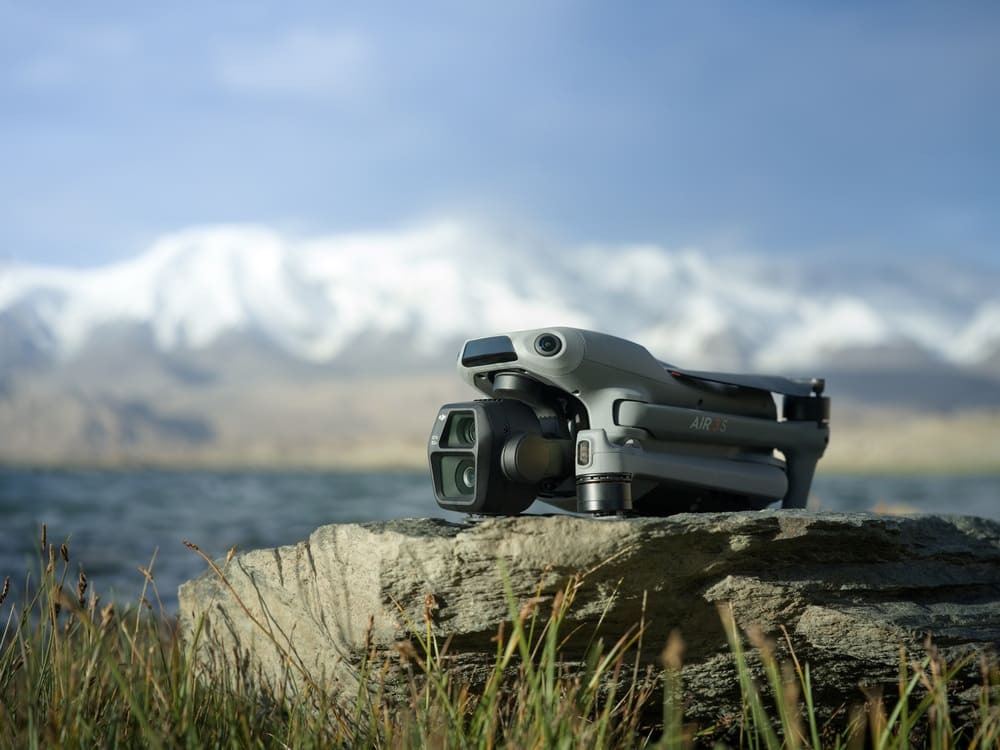
Dual-camera concept: 1-inch primary camera (24mm) plus 70mm medium telephoto, which is perfect for switching between context and architectural detail in the same flight. Up to 14 stops of dynamic range is exactly the kind of real estate-friendly spec that helps you avoid blown skies while keeping shadows usable. Strong endurance with 45-minute flight time, so you can film 3 to 4 properties in a single charge. 360-degree obstacle avoidance with LiDAR keeps you safe in tight residential areas. Native vertical 9-by-16 video mode for Reels and TikTok.
source: mynewsdesk.com
Real world notes
The 70mm telephoto lens is the feature that changes how you shoot real estate. You stop trying to get the whole property in one wide frame and start thinking about compression pulling the house forward against the trees or skyline behind it. That one shift in thinking produces better listing footage than any camera upgrade alone.
Recommended settings approach
Shoot 4K at 60fps at high bitrate for color-grading flexibility. Use automatic exposure bracketing (AEB) for mixed-light scenes. Enable vertical video mode for at least one pass per property. Apply ND filters to maintain 24fps shutter speed and create cinematic motion blur.
Autel EVO Lite+ — Best for 6K video quality
Best for:
Videographers who prioritize raw resolution and want adjustable aperture control, low-light specialists, editors who grade from highly detailed footage.
Not ideal for:
Pilots expecting DJI-level app stability, fast-paced multi-listing days (smaller user base means slower support), agents who just want simple, affordable output.
Key features for real estate
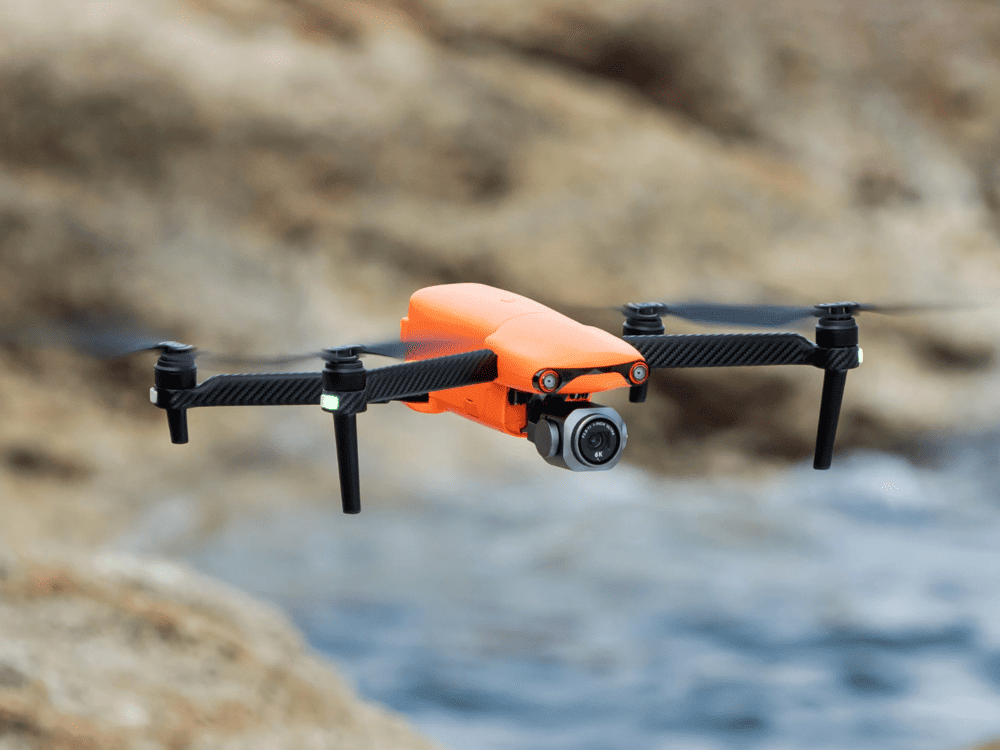
The standout feature is 6K video recording at 30fps (6144-by-3160 pixels), which is the highest resolution in the real estate compact-and-mid-range segment. A 1-inch CMOS sensor ensures strong shadow and highlight detail. Adjustable aperture from f/2.8 to f/11 gives creative depth-of-field control that DJI drones cannot match. 10-bit HDR video allows exceptional post-grading flexibility. Flight time reaches 40 minutes, which rivals the Air 3S. Front, rear, and downward obstacle avoidance covers basic safety needs.
Real world notes
The adjustable aperture is the spec that doesn’t get enough attention. On a DJI drone, you use ND filters to control exposure. On the EVO Lite+, you turn a dial. For photographers coming from camera work, that feels immediately natural.
If you are recording for post-production heavy use (grading, reframing, 3D cropping), the Autel EVO Lite Plus is a legitimate alternative to DJI’s flagships. The 6K output feels future-proof. Low-light performance (thanks to the large sensor and high ISO ceiling) is notably stronger than the Mini 4 Pro. The adjustable aperture is a genuine creative tool for professional real estate work.
Trade-off: Autel’s app ecosystem is smaller than DJI’s. Firmware updates come less frequently. Repair networks outside major cities are thinner. But for pure image quality and video specs, Autel deserves serious consideration.
Recommended settings approach
Shoot 6K at 30fps for maximum resolution. Use 10-bit HDR mode for complex lighting scenes. Set aperture at f/4 to f/5.6 for balanced depth-of-field. Apply ND filters to maintain cinematic shutter angle.
DJI Mavic 4 Pro — Best for premium image quality
Best for:
High-end listings, developers, and teams where the drone output must hold up in paid ads, large screens, and detailed crops. This is the current flagship for professional real estate work.
Not ideal for:
Standard listings where speed, simplicity, and cost control matter more than ultimate quality, or pilots uncomfortable with premium price tags.
Key features for real estate
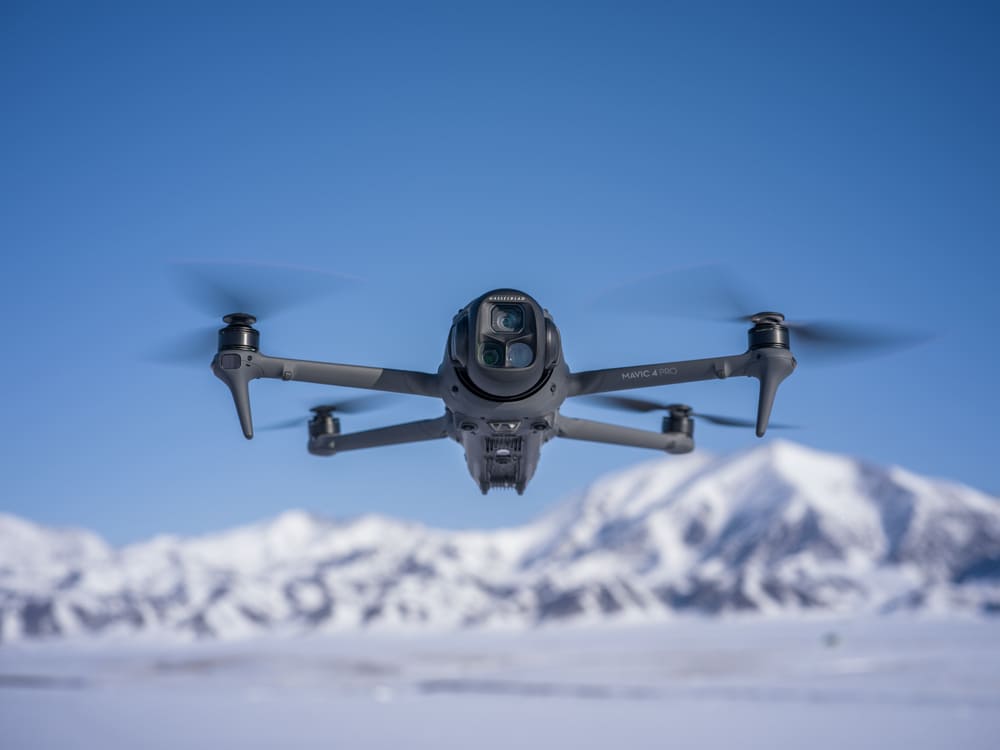
DroneLife reports headline features including a 100MP Hasselblad main camera, a 360-degree gimbal design, and 6K video. That combination is strongly aligned with real estate needs: vertical deliverables, reframing flexibility, and high-detail stills for brochures and premium websites. The gimbal design suggests improved flexibility for property-specific framing angles. 6K resolution provides exceptional future-proofing and editing flexibility in post-production.
source: mynewsdesk.com
Real world notes
This is the drone that makes sense when your listing fee justifies the kit. For a €500,000 property, a €2,300 drone that delivers 100MP stills and 6K video is a sensible line item. For a standard suburban listing, it’s genuinely more drone than the job needs.
Recommended settings approach
Treat this as a “capture once, repurpose everywhere” tool. Shoot a stable wide hero, a controlled orbit, and a set of detail angles you can reuse in different edits, including vertical crops. Use RAW stills capture for maximum post-production flexibility.
DJI Mavic 3 Pro — Best if you find the right deal
Best for:
Pros who want a mature, proven platform and can buy at a price that makes sense in 2026 when new models have arrived.
Not ideal for:
Buyers who always want the newest model and latest workflow features, or those prioritizing the absolute latest hardware upgrades.
Key features for real estate
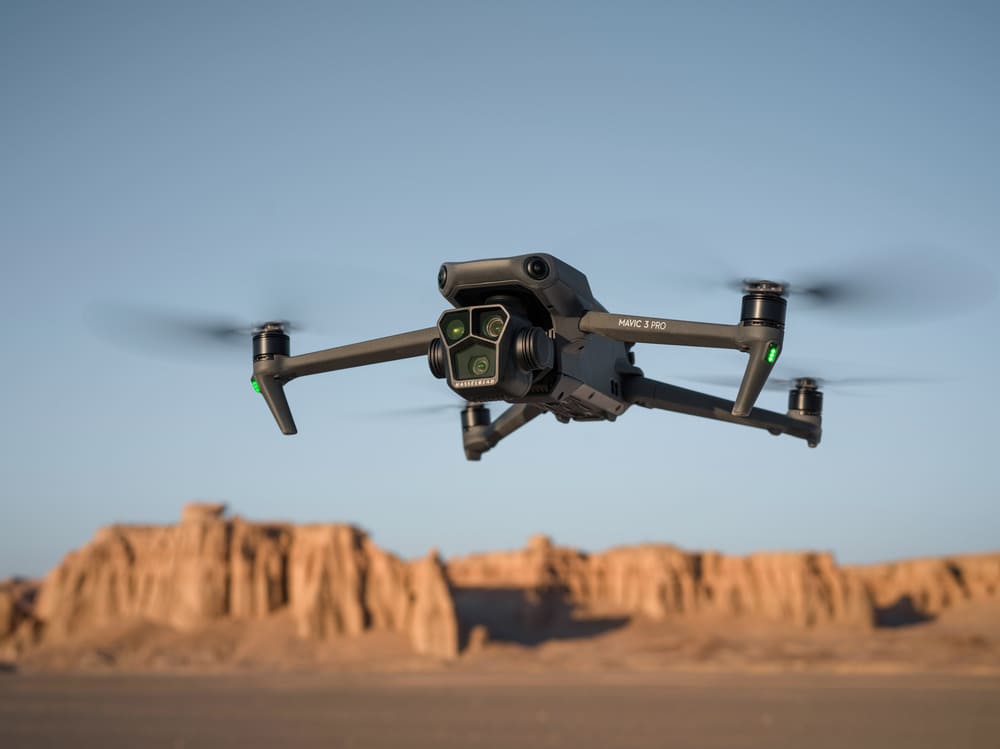
Commonly described as the first consumer drone with three cameras, which can be useful for mixing wide context with tighter hero framing. It is positioned as a versatile professional tool that can straddle photo and video needs. 5.1K video and triple-camera system offer proven versatility across real estate work.
source: mynewsdesk.com
Real world notes
The Mavic 3 Pro is the drone I’d recommend to someone who wants a proven professional platform and doesn’t need to own the newest hardware. The triple-camera system is mature, well-documented, and widely supported. In 2026, the pricing makes it worth a serious look if you catch it on a bundle deal.
Recommended settings approach
Keep it simple and repeatable: wide establish, orbit, detail passes, then one vertical cut if your workflow supports it. Use automatic exposure bracketing for mixed-light scenes.
DJI Avata 2 — Best for interior tours and cinematic reveals
Best for:
Luxury property interior walkthroughs, cinematic flyover sequences through homes, boutique agents marketing ultra high-end estates, architectural detail emphasis, and dramatic property reveals.
Not ideal for:
Exterior real estate work (lacks obstacle avoidance outdoors), casual pilots (FPV requires training and VR goggles), quick multi-property shoots, or agents wanting straightforward point-and-shoot simplicity.
Key features for real estate
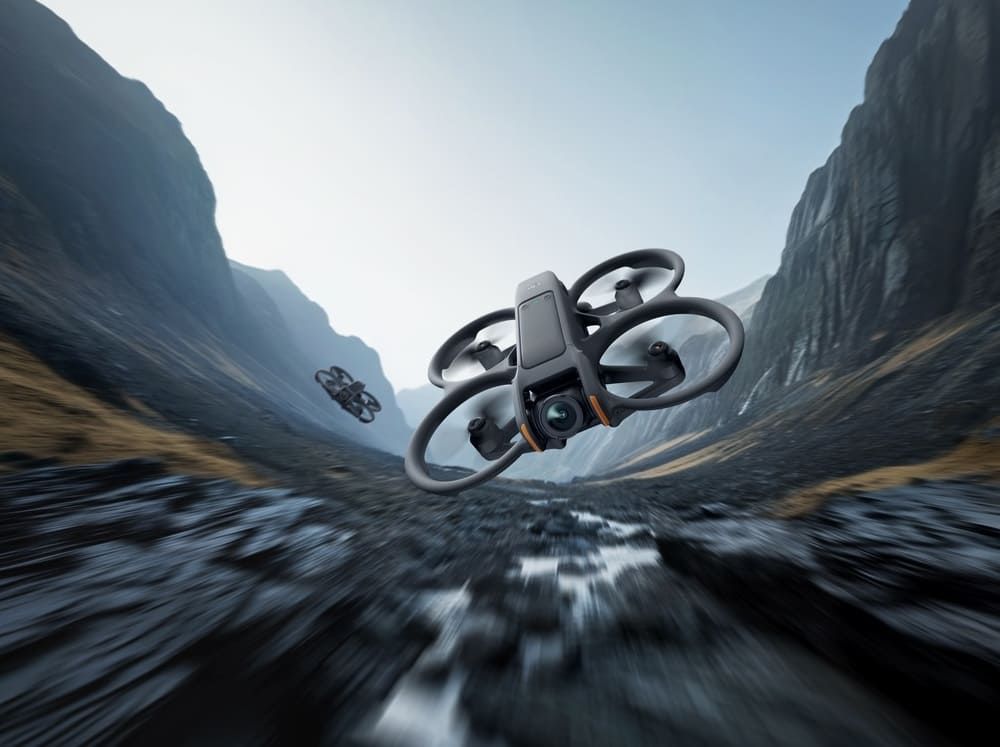
The 377-gram weight is portable but still requires EU licensing (falls into C1 or C2 class depending on regional interpretation). You get 4K at 60fps video from a 1/1.3-inch sensor with exceptional low-light performance thanks to the large aperture and RockSteady 2.0 stabilization. The 18-minute hover time translates to 16-to-18-minute real-world flight. A 155-degree ultra-wide field of view fills frames dramatically without distortion, which is essential for tight indoor spaces. The D-Cinelike color profile is cinema-ready straight from the camera. There is no obstacle avoidance because the design prioritizes tight indoor spaces where sensors would create jerky, unpredictable behavior.
source: mynewsdesk.com
Real world notes
I’ll be direct: this is a specialist tool. If you’ve never flown FPV before, budget time for practice before you point it at a client’s property. But for the right shoot a luxury penthouse, an architect-designed home, a hospitality venue – there’s nothing else that creates the same interior wow factor.
The Avata 2 is specialized equipment. It is not a direct competitor to the DJI Mini or Air series for exterior work. It is a complement that shines in a specific niche: interior cinematic content. Its strength is flying through living rooms, revealing vaulted ceilings, gliding through hallways with impossible smoothness, and creating that “wow factor” that luxury property tours demand.
The ultra-wide 155-degree lens is essential for tight rooms because it prevents claustrophobic framing. The lack of obstacle avoidance is intentional, not a flaw. Sensors would create unwanted collision avoidance kicks that ruin smooth FPV flying. Pilots fly via FPV (first-person view in VR goggles), giving them precise manual control instead of relying on autonomous flight modes.
For luxury or architectural properties, an Avata 2 interior tour combined with exterior footage from a Mini 5 Pro or Air 3S creates a powerful two-part narrative: see the outside context and architecture, then invite buyers inside for an immersive journey through the finest spaces.
Recommended settings approach
Shoot 4K at 60fps in D-Cinelike profile for maximum post-grading flexibility. Use slow, deliberate movements to emphasize space, light, and material quality. Avoid rapid pans and aggressive stick movements because they create nauseating motion blur in VR goggles and look unprofessional when exported to video. Combine with DaVinci Resolve and Gyroflow stabilization for additional smoothing in post-production if needed.
Practice your lines on the ground or in open space before executing interior shots, because FPV flying is more demanding than standard drone piloting.
Conclusion
Choosing the right drone for real estate photography in 2026 comes down to one honest question: how often do you fly, and what do your clients expect?
If you shoot occasionally and want simple compliance, the Mini 4 Pro is still the smartest entry point – capable, portable, and easy to justify on any listing fee. If you’re shooting multiple properties a week and want professional image quality without the weight class headache, the Mini 5 Pro is the upgrade that makes sense in 2026. If real estate drone work is your primary income and you need both wide context and telephoto compression in a single flight, the Air 3S is the workhorse the job deserves.
For premium listings where the drone footage ends up in paid advertising and print materials, the Mavic 4 Pro earns its price. For interior cinematic work on luxury properties, the Avata 2 is in a category of its own.
Whatever you choose, master the fundamentals first. Shoot systematically, use ND filters, bracket for dynamic range, and practice your orbits until they’re smooth. A skilled operator with a Mini 4 Pro will consistently outperform a novice with a Mavic 4 Pro. The drone matters less than the person flying it.
Once your drone is chosen, the Complete Drone Videography Guide covers the camera settings, shot types, and editing workflow needed to deliver footage your real estate clients will actually use.
Frequently Asked Questions
Do I need a 1-inch sensor for real estate?
Not always, but it helps when you need clean shadows and a controlled sky in the same frame. The Air 3S, Mini 5 Pro and EVO Lite Plus are positioned with 1-inch primary cameras and up to 14 stops of dynamic range, which is exactly the kind of spec that makes editing easier. The Mini 4 Pro at 1/1.3-inch performs admirably for standard listings, but if you are shooting frequently and want maximum flexibility, the 1-inch upgrade is worthwhile.
Is a sub-250g drone good enough?
Yes for many listings, especially if your priority is speed and simpler compliance. Both the Mini 4 Pro and Mini 5 Pro are under 249g and support true vertical shooting, which can cover both MLS and social deliverables. The Mini 5 Pro adds a larger sensor and LiDAR, so if budget allows, it is the better 2026 choice.
What is the best drone height for listing photos?
Use height as a storytelling tool. Start higher for context, then come lower for architectural hero angles. Avoid flying so low that the property looks distorted and cramped. A 50-to-100-meter altitude range works well for most residential properties.
How many batteries for a shoot day?
For a busy day, plan enough batteries that you can do at least two full properties without waiting on charging. The Air 3S offers up to 45 minutes of flight, and the Mini 5 Pro up to 36-to-52 minutes, which helps, but real-world days still benefit from spares.
Do I need ND filters?
If you shoot video in daylight, ND filters are one of the simplest ways to make motion look natural and cinematic. Without them, fast-moving drones over properties look jerky and unprofessional.
How do I deliver vertical video fast?
Shoot a dedicated vertical pass for the hero shot, then edit a simple 10-to-20-second reel with one hook, one reveal, and one closing angle. Native vertical gimbal on the Mini 5 Pro and Air 3S makes this workflow much cleaner.
Is there a good drone for interior real estate?
For standard exterior and walkthrough work, the Mini 5 Pro or Air 3S cover most use cases. Interior cinematic work is where the Avata 2 earns its place.
Dipon is a drone and timelapse cinematographer based in Ulm, Germany, with over 15 years of experience turning real spaces and projects into cinematic visuals. With a background in digital marketing, every shot is planned with a clear purpose — where it will appear, who will see it, and what it should help them decide.
You May Also Like
Best Drones: The Complete Buyer’s Guide (2026)

The Complete Drone Videography Guide (2026)
Best ND Filters for Timelapse: Strength Guide & Picks

Best Drones Under 300 Euro 2026: Entry-Level Options That Actually Deliver
Manual Drone Camera Settings: ISO, Shutter, Aperture Explained
Drone Pre-flight Checklist for Beginners: Safety System for Confident Flights
Drone Flying Tutorial : Beginner to Confident Pilot
Best Drones for Beginners (2026): Safe, Easy Picks + Buying Guide
Best Drones Under 500 Euro (2026) – Top 6 Budget Camera Drones
DJI Mini 5 Pro Review (2026): The Ultimate Travel Drone?
Best Drones for Photography 2026: The Ultimate Buyer’s Guide
Need help capturing aerials for your next project but not ready to invest in the gear yet? Check out our Drone Videography to see how Aero Timelapse Studio can help elevate your production.