Best Drones for Photography 2026: The Ultimate Buyer's Guide
Dipon | December 2025
Every few months a new drone drops with a bigger sensor, a longer battery claim, and a price tag that makes you question your life choices. The marketing is always convincing. The spec sheets always look great. And yet often people I talk to still end up buying the wrong one.
Not because they didn’t do their research, but because they optimised for the wrong things.
This guide cuts through that. A €2,000 drone in the wrong hands produces worse footage than a €500 drone used correctly and buying beyond your actual needs is one of the most common and expensive mistakes first-time buyers make. Every pick here is matched to a purpose, not a price point.
Whether you’re buying your first drone or upgrading to something serious, you’ll find your answer here.
Affiliate Disclosure
This guide contains affiliate links. Purchases made through these links support Aero Timelapse Studio at no additional cost to you. I only recommend products I personally use or carefully research. As an Amazon Associate I earn from qualifying purchases.
Quick Summary: The Top Picks for 2026
Too busy to read the whole guide? Here is the cheat sheet for the best gear to buy this year.
| Category | Winner | Why It Wins | Price |
|---|---|---|---|
| Best Professional | DJI Mavic 3 Pro | Triple-lens system & 4/3 sensor quality. | Check Latest Price |
| Best All-Rounder | DJI Air 3S | 1-inch sensor quality + C1 certification. | Check Latest Price |
| Best Portable | DJI Mini 4 Pro | True vertical shooting & <249g freedom. | Check Latest Price |
| Best Budget | Potensic Atom | 4K video without the “toy” feeling. | Check Latest Price |
A few years ago, getting cinema-quality shots from the sky felt like a luxury reserved for Hollywood productions or agencies with five-figure budgets. You needed a pilot, a camera operator, a massive hexacopter, and usually a van to carry it all.
Fast forward to 2026, and the game has completely changed. A solid professional drone now costs less than a fancy lens for your DSLR, and the results can completely transform how you market real estate, destinations, or events. However, with the market flooded with options – from the polished DJI ecosystem to the scrappy contenders from Autel – it is getting harder to separate the professional tools from the expensive toys.
If you are looking for the best drones for photography in 2026, this guide is for you. It focuses on real-world performance instead of marketing buzzwords and walks through which drones actually deliver when the light is fading and there’s no chance for a retake. Whether you shoot real estate, travel, events, or just for fun, you’ll find practical recommendations that match different budgets, skill levels, and creative goals.
“Note: Regulations change frequently. Always check your local aviation authority’s latest rules before flying.“
The State of Drone Tech in 2026: What to Expect
Before we dive into specific models, we need to talk about the engine under the hood. You wouldn’t buy a car just because it’s red; you shouldn’t buy a drone just because it says “8K” on the box. Buying a drone in 2026 means looking for features that will last.
Sensor Size: The "King" of Specs
This is the single most important factor, period. A larger sensor captures more light, provides better dynamic range (detail in shadows and highlights), and creates that creamy, professional depth of field.
- 1/1.3 Inch (The Standard): Found in the Mini 4 Pro. It’s incredible for its size, but in low light, you will see noise.
- 1 Inch (The Pro Entry): Found in the Air 3S. This is where “professional” work really begins. The difference in twilight performance is noticeable immediately.
- 4/3 CMOS (The Gold Standard): Found in the Mavic 3 Pro. This is the same size sensor found in many mirrorless ground cameras. It allows you to pull detail out of deep shadows that would be pitch black on a smaller drone.
- Full Frame: Found in enterprise drones like the DJI Inspire 3. Matches pro mirrorless cameras with unmatched low-light and bokeh, but starts at €15,000+.
Bitrate and Color Profiles (Log)
If you are shooting JPEG photos and standard video to upload straight to Instagram, this doesn’t matter. But if you are a professional delivering work to clients, you need 10-bit color. A drone that shoots in D-Log M or D-Log gives you a “flat” image that looks gray out of the camera. But in post-production, that gray image holds millions more colors than a standard profile. It allows you to color grade the sky without it turning into a blocky, pixelated mess.
Learn more: Understanding 10-Bit Color depth
Stability and Wind Resistance
Manufacturer flight times are… optimistic. If the box says “45 minutes,” expect 30-35 minutes in the real world. Why? Because the drone is constantly fighting the wind. Here in Europe, especially near the mountains or coast, wind resistance is critical. A drone that drifts in a breeze is useless for long-exposure photography (hyperlapses) or precise architectural framing. You need a drone with a strong motor torque that feels like a “tripod in the sky.”
Best Drones for Photography 2026
After testing the latest models from DJI, Autel, Potensic, and others, here’s our ranked list of the best drones for photography available right now.
We prioritized image quality first (sensor size and dynamic range matter most), then real-world reliability like wind resistance and flight time, portability for travel, and overall value for money.
1. DJI Mavic 3 Pro – The Heavyweight Champion
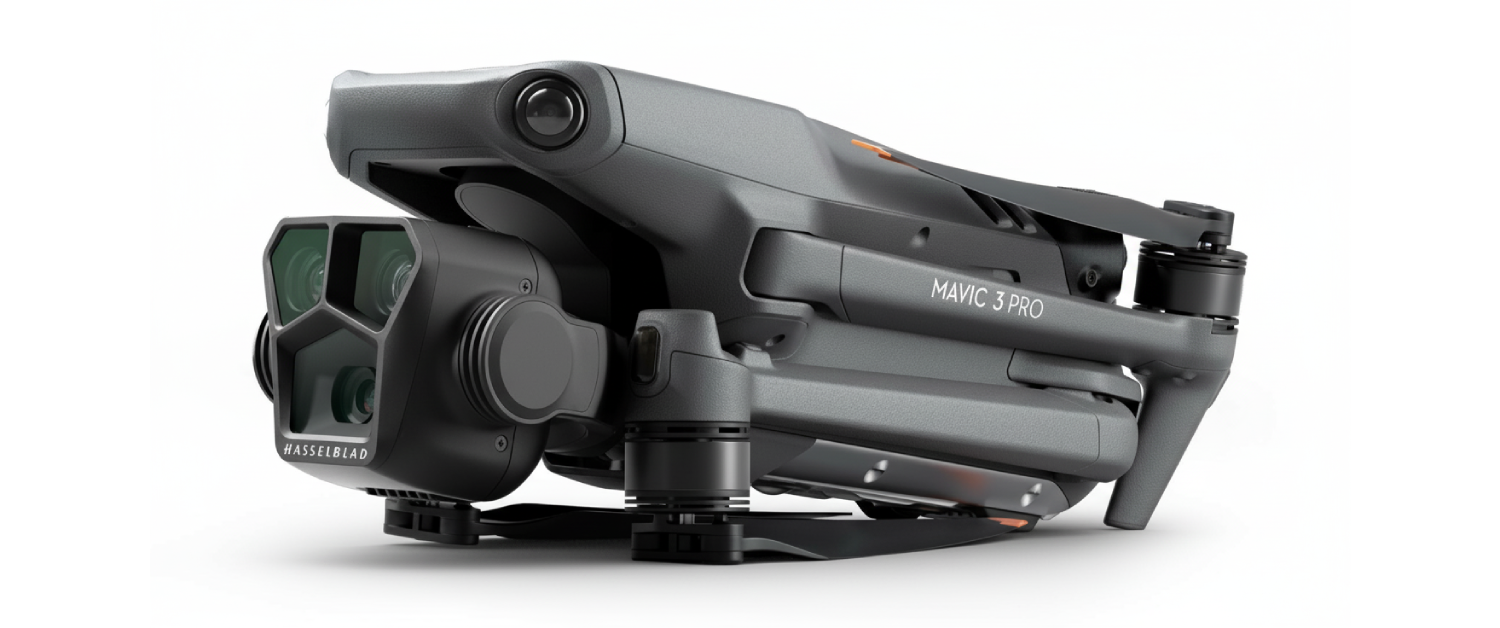
Best For: Professional filmmakers, high-end real estate, and print photography.
The Mavic 3 Pro isn’t just a drone; it’s a flying camera bag. For years, drone pilots were stuck with one wide-angle lens (usually 24mm). If you wanted a close-up, you had to fly dangerously close to the subject, which is risky and noisy. The Mavic 3 Pro changed the physics of drone photography with its triple-camera system. You can switch from the wide 24mm Hasselblad lens to a 70mm medium telephoto, and then to a 166mm zoom. This allows you to stand 200 meters away from a church tower and still get a detailed close-up, creating a “parallax effect” that feels like a cinema helicopter shot.
Despite being a couple of years old in design, it remains the king in 2026 because no other portable drone offers a 4/3 CMOS sensor. The dynamic range is staggering—you can shoot directly into a sunset and still pull detail out of the deep shadows. It supports Apple ProRes 422 HQ (on the Cine version), making it the darling of production houses that need to match drone footage with ARRI or RED cinema cameras. The only downside is the weight; at over 900g, it falls into the C2 Class in Europe, meaning you need to maintain stricter distances from people unless you have the A2 license.
Technical Specifications:
| Feature | Spec |
|---|---|
| Sensors | 4/3 CMOS (Main) + 1/1.3″ (Med Tele) + 1/2″ (Tele) |
| Max Video | 5.1K @ 50fps / 4K @ 120fps |
| Color Depth | 10-bit D-Log / D-Log M |
| Weight | 958g (C2 Certified) |
| Max Speed | 21 m/s (Sport Mode) |
Pros
+ Unmatched image quality with the Hasselblad sensor.
+ The 70mm lens is a storytelling cheat code.
+ Omnidirectional obstacle sensing is nearly crash-proof.
+ Variable aperture (f/2.8-f/11) allows control over shutter speed.
Cons
– Expensive (Combo kits exceed €2,500).
– Heavier C2 classification restricts urban flight paths.
– Telephoto lenses have smaller sensors than the main camera.
Source: Official DJI Mavic 3 Pro Specs
2. DJI Air 3S – The Smartest Buy for 2026
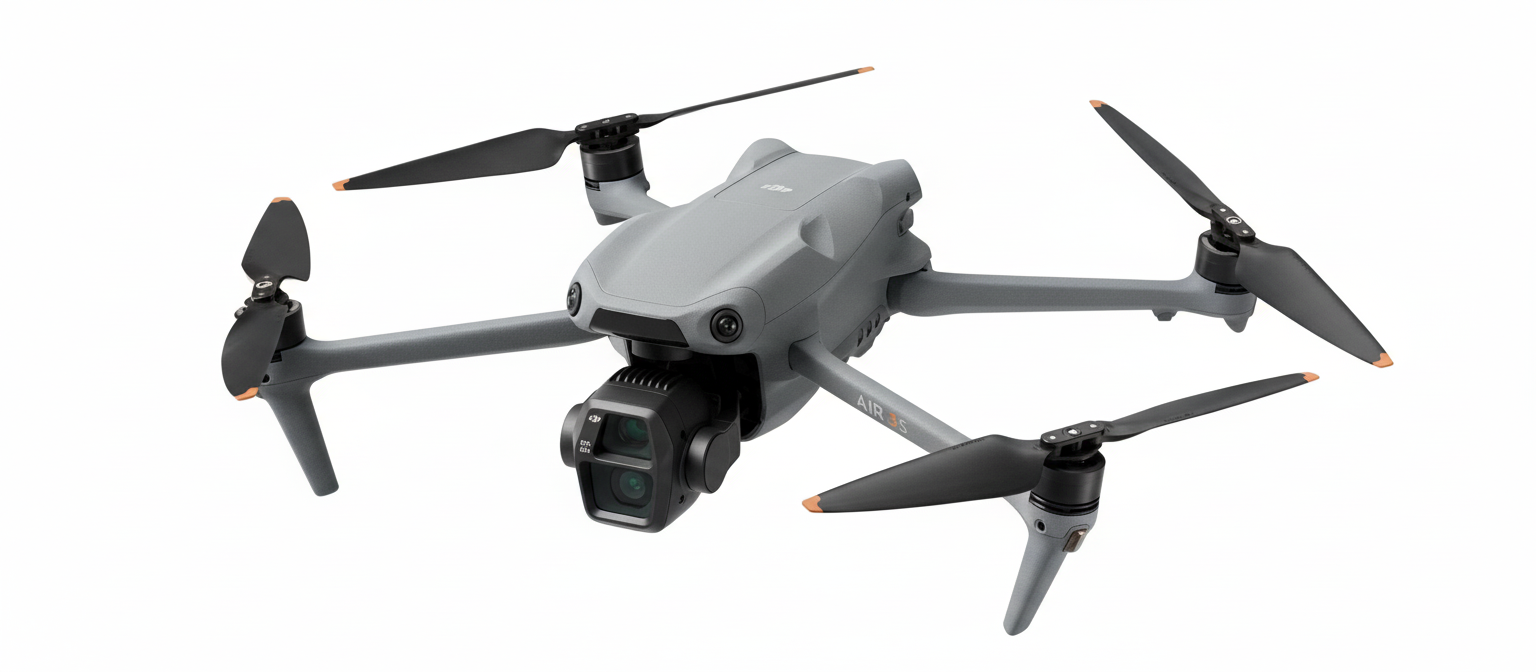
Best For: Travel photographers, wedding videographers, and 90% of business owners.
If the Mavic 3 Pro is a luxury SUV, the DJI Air 3S is the reliable, high-performance sedan. Released late in the previous cycle, it cemented its place as the “sweet spot” in the market for 2026. It borrows the dual-camera concept from its big brother (Wide + Medium Tele) but packs it into a smaller frame. The biggest upgrade for buyers this year is the 1-inch sensor in the main camera. This is a massive jump from the old Air 3, offering significantly cleaner images at twilight or indoors.
The standout feature of the Air 3S is its LiDAR obstacle avoidance. Traditional visual sensors go blind in the dark or in low-contrast environments (like white walls). The Air 3S uses laser pulses to “see” the world, making it the safest drone to fly at night or during indoor real estate tours. Furthermore, at 724g, it carries the C1 Class label. This is huge in Europe. It allows you to fly in the A1 subcategory—meaning you can technically fly over uninvolved people (though not crowds) and you don’t need the complex A2 license required for the Mavic 3.
Technical Specifications:
| Feature | Spec |
|---|---|
| Sensors | 1-inch CMOS (Main) + 1/1.3″ (Tele) |
| Max Video | 4K @ 60fps HDR / 4K @ 100fps |
| Color Depth | 10-bit D-Log M |
| Weight | 724g (C1 Certified) |
| Storage | 42GB Internal Storage built-in |
Pros
+ C1 Certification allows for flexible flight in cities.
+ LiDAR makes it the safest drone for night operations.
+ 42GB internal storage saves you when you forget your SD card.
+ Significantly cheaper than the Mavic 3 Pro.
Cons
– Fixed aperture (f/1.8) means you must use ND filters.
– No 5.1K resolution option.
Source: DJI Air 3S Product Page
3. DJI Mini 4 Pro – The Pocket Powerhouse
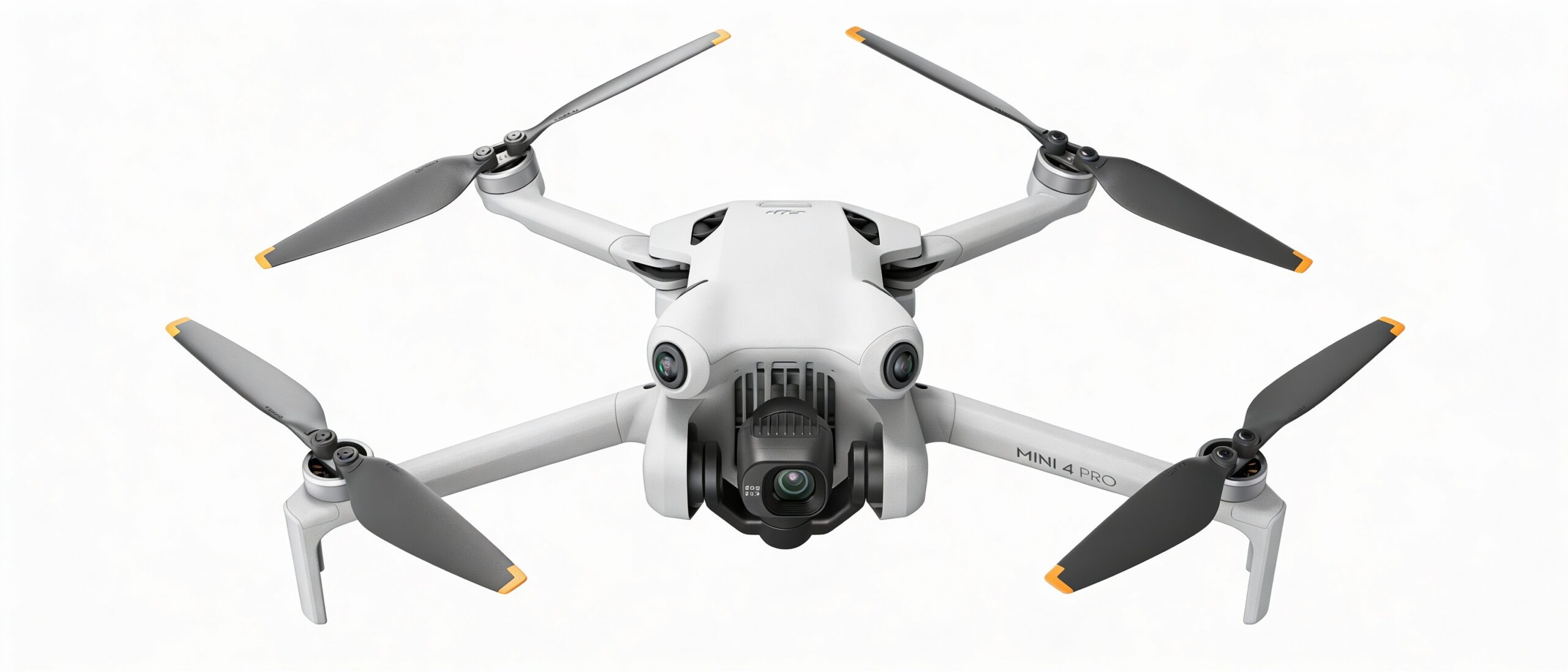
Best For: Social media content, beginners, hikers, and travel vloggers. I travel with a Mini-class drone when I’m scouting new timelapse locations — the weight difference genuinely changes what you’re willing to carry up a hill at 5am.
Don’t let the size fool you. The Mini 4 Pro is the first sub-250g drone that feels “pro” rather than “compromise.” Its superpower is the True Vertical Shooting. The gimbal physically rotates 90 degrees, allowing you to shoot native 9:16 video for TikTok, Instagram Reels, or YouTube Shorts. Unlike other drones that just crop the center of the image (losing resolution), the Mini 4 Pro uses the full sensor.
The real reason to buy this in 2026 is Regulatory Freedom. Because it weighs under 249g (Class C0), it faces the fewest flight restrictions in Europe. You can fly it in many urban areas, parks, and travel destinations where a heavier drone would be grounded or require permits. It fits into a jacket pocket along with its controller, making it the ultimate “no excuses” camera—the best drone is the one you actually have with you.
Technical Specifications:
| Feature | Spec |
|---|---|
| Sensors | 1/1.3-inch CMOS |
| Max Video | 4K @ 60fps HDR / 4K @ 100fps |
| Color Depth | 10-bit D-Log M |
| Weight | < 249g (C0 Certified) |
| Flight Time | ~28 mins (Real world) |
Pros
+ C0 Class = almost zero regulatory friction in EU.
+ True Vertical shooting is a time-saver for social media.
+ Omnidirectional sensing (rare for a mini drone).
Cons
– Struggles in wind speeds over 10 m/s (Level 5).
– Smaller sensor shows noise in low-light/night shots.
Source: DJI Mini 4 Pro Specs
4. Autel EVO II Pro V3 – The "No-Geofence" Alternative
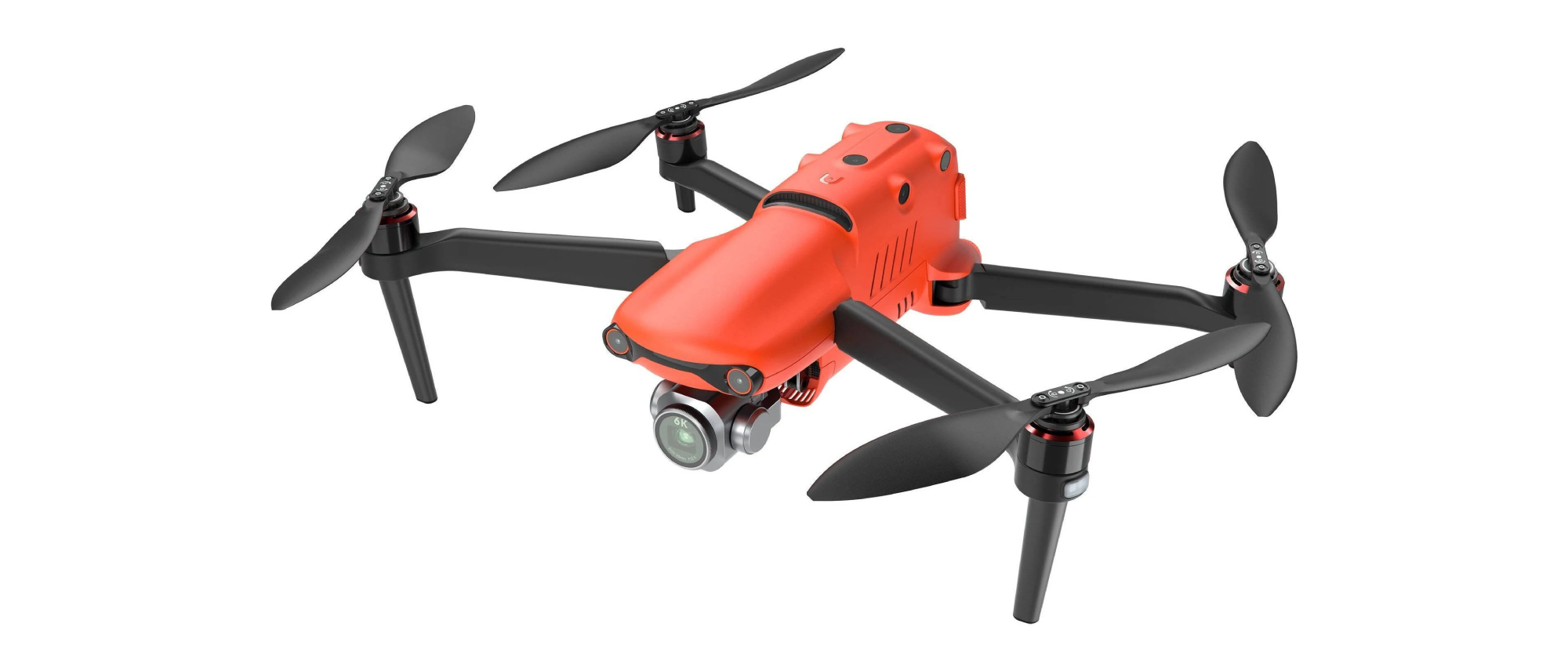
Best For: Industrial mapping, photogrammetry, and privacy-conscious pilots.
If you prefer to steer clear of the DJI ecosystem, Autel is the only serious contender left. The EVO II Pro V3 is a workhorse beast. It features a massive 6K 1-inch sensor that is incredibly sharp—perhaps even sharper than the Mavic 3’s standard profile due to aggressive detail processing. It is widely used in construction and mapping because it produces very linear, distortion-free images.
The main selling point for many is the lack of NFZ (No-Fly Zone) Geofencing. DJI drones will physically refuse to take off if their database thinks you are near a restricted zone (even if you have permission). The Autel gives you a warning but lets you fly. This puts 100% of the legal responsibility on you, the pilot, but it guarantees the drone won’t brick itself during a critical mission because of a database error.
Technical Specifications:
| Feature | Spec |
|---|---|
| Sensors | 1-inch CMOS (20MP) |
| Max Video | 6K @ 30fps / 4K @ 60fps |
| Color Depth | 10-bit Log |
| Weight | 1191g (Legacy/C2) |
| Geofence | None (Pilot Responsibility) |
Pros
+ No software geofencing restrictions.
+ 6K resolution allows for massive cropping.
+ Excellent low-light sensitivity (f/2.8-f/11 aperture).
Cons
– Heavy and bulky compared to DJI equivalents.
– Video transmission range is weaker than DJI O4 system.
– Harder to find batteries and accessories in local shops.
Source: Autel Robotics EVO II Pro V3
5. Potensic Atom 4K – The Budget Champion
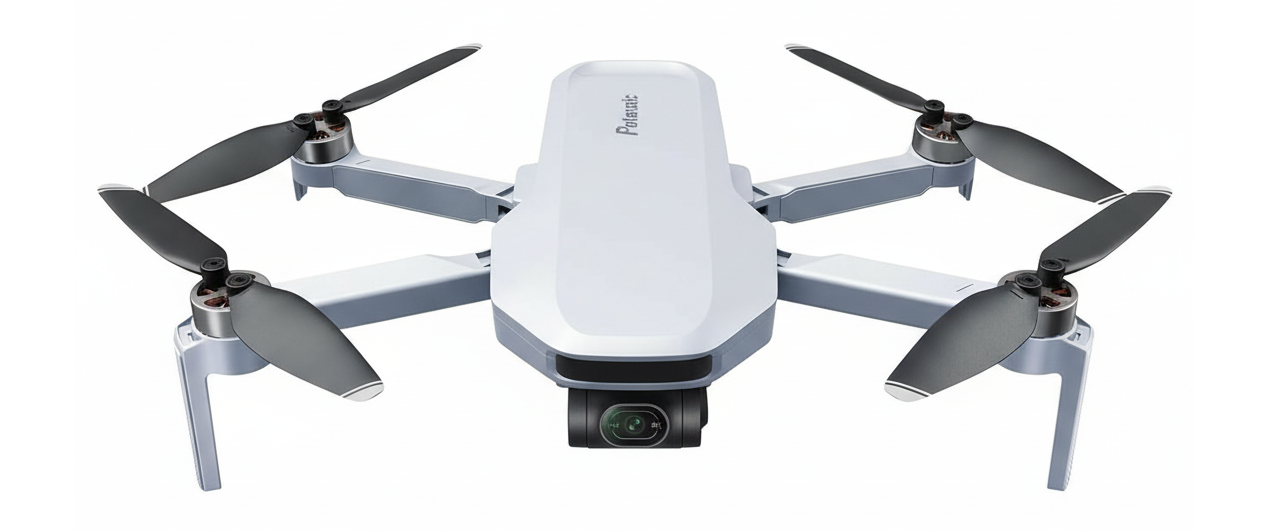
Best For: Hobbyists, students, and budget-conscious entry.
If you have €350 to spend, do not buy a cheap knock-off from Amazon. Buy the Potensic Atom 4K. It is the only budget drone that mimics the DJI flight dynamics successfully. It features a real 3-axis mechanical gimbal (crucial for smooth video) and shoots legitimate 4K video.
It flies surprisingly well, holding its position in moderate wind thanks to GPS. The controller connects to your phone just like a DJI drone. While it lacks obstacle avoidance sensors (meaning if you fly it into a tree, it hits the tree), it is the perfect learning platform. If you crash this, you cry a lot less than if you crash a Mavic 3. “It is also the drone we recommend in our complete beginner buying guide.“
Technical Specifications:
| Feature | Spec |
|---|---|
| Sensors | 1/3-inch CMOS |
| Max Video | 4K @ 30fps |
| Weight | < 249g (C0 Certified) |
| Gimbal | 3-Axis Mechanical |
| Flight Time | ~22 mins (Real world) |
Pros
+ Unbeatable price-to-performance ratio.
+ Uses Sony sensors for decent daylight quality.
+ Solid 3-axis stabilization.
Cons
– No obstacle avoidance sensors.
– Limited dynamic range (skies often blow out).
– No 10-bit color options.
Source: Potensic Atom Overview
Mini 5 Pro and Mavic 4 Pro are exciting on paper, but at this point they are still in the early stage, not broadly available in Europe, and have not been properly field‑tested in real production environments. Because of that, they are not included in the core recommendations of this 2026 guide yet. Once these models are officially released in the EU, receive their final C‑class labels, and have been flown and evaluated in real‑world shoots, this article will be updated with a full, honest review based on hands‑on experience rather than rumor or pre‑release speculation.
2026 Drone Comparison Table: Price vs. Performance
| Drone Model | Sensor (Main) | Max Res | Flight Time (Real) | Weight | EU Class | Approx Price (EU) | Best For | Price |
|---|---|---|---|---|---|---|---|---|
| Mavic 3 Pro | 4/3 CMOS | 5.1K | 38 mins | 958g | C2 | €2,100+ | Cinema/High-End | Check Latest Price |
| Air 3S | 1″ CMOS | 4K | 38 mins | 720g | C1 | €1,200 | All-Round Pro | Check Latest Price |
| Mini 4 Pro | 1/1.3″ CMOS | 4K | 28 mins | 249g | C0 | €900 | Social/Travel | Check Latest Price |
| Autel EVO II | 1″ CMOS | 6K | 32 mins | 1191g | C2 | €2,000 | Mapping/No-Geofence | Check Latest Price |
| Potensic Atom | 1/1.3″ CMOS | 4K | 22 mins | 249g | C0 | €350 | Budget | Check Latest Price |
Buying Guide: Which One Fits Your Life?
Buying a drone isn’t just about “business” vs. “hobby.” It’s about how you travel and what you create.
These aren’t theoretical profiles — they’re composites of the actual clients and students I speak to most often. The questions they ask guided exactly which drones made this list.
The "Hiker & Backpacker"
You care about weight above all else. You are climbing 1,000 meters of elevation in the Alps.
- Your Pick: DJI Mini 4 Pro. It fits in a water bottle pocket. The USB-C charging means you can charge it with your power bank.
The "Real Estate Side-Hustler"
You want to offer packages to local realtors — if that’s you, we have a full best drones for real estate photography guide that goes much deeper.
- Your Pick: DJI Air 3S. The wide-angle lens handles tight interiors, and the C1 label lets you fly in residential neighborhoods legally. The LiDAR ensures you don’t crash into a living room wall.
The "Aspiring Filmmaker"
You want to create moody, cinematic travel films or commercials. You want to color grade your footage.
- Your Pick: DJI Mavic 3 Pro. You need the variable aperture to maintain the “180-degree shutter rule” without swapping ND filters constantly. You need the 10-bit D-Log to push colors in DaVinci Resolve.
The "Weekend Dad/Mom"
You just want cool shots of the family vacation in Italy.
- Your Pick: Potensic Atom or a used DJI Mini 3. It’s cheap enough that you won’t stress about it, but good enough to look amazing on the family 4K TV. Looking for more options in this price range? See our best drones under €500 guide.
Accessories That Actually Matter
I see beginners buying the “Mega Ultimate Bundle” with 50 cheap plastic accessories. Don’t do that. Here is what you actually need:
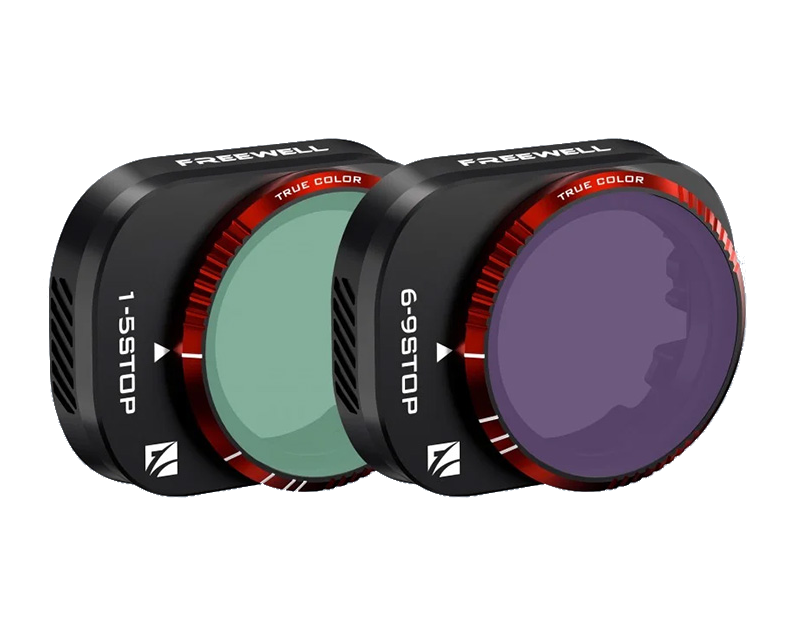
ND Filters
These are sunglasses for your drone. Why? To get cinematic video, your shutter speed should be double your frame rate (e.g., 25fps = 1/50th shutter). On a sunny day, 1/50th is too bright. An ND filter cuts the light so you can maintain that smooth motion blur. Brands like Freewell or PolarPro are excellent. Both make model-specific kits so you get the exact filter set for your drone.
High-Speed MicroSD Cards
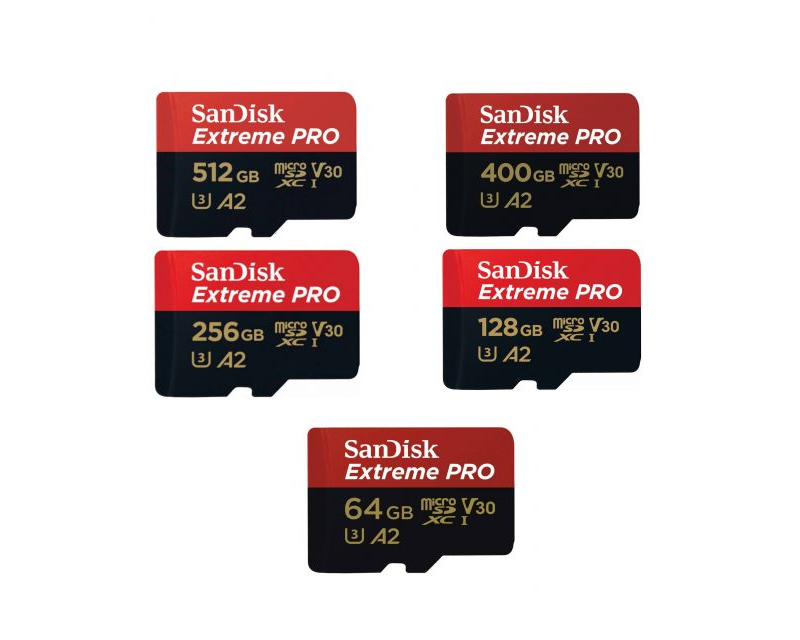
Drones generate massive data rates (often 150+ Mbps for 4K/5.1K video), so cheap standard U1/V10 microSD cards will cause stuttering, dropped frames, or recording failures. All modern compact drones like DJI Mavic, Air, Mini series and Autel Evo use microSD (not full-size SD) slots. Opt for reliable V30 or higher cards such as SanDisk Extreme Pro — for peak 6K/8K or high-FPS modes, upgrade to V60/V90 to ensure smooth performance.
Controller Lanyard
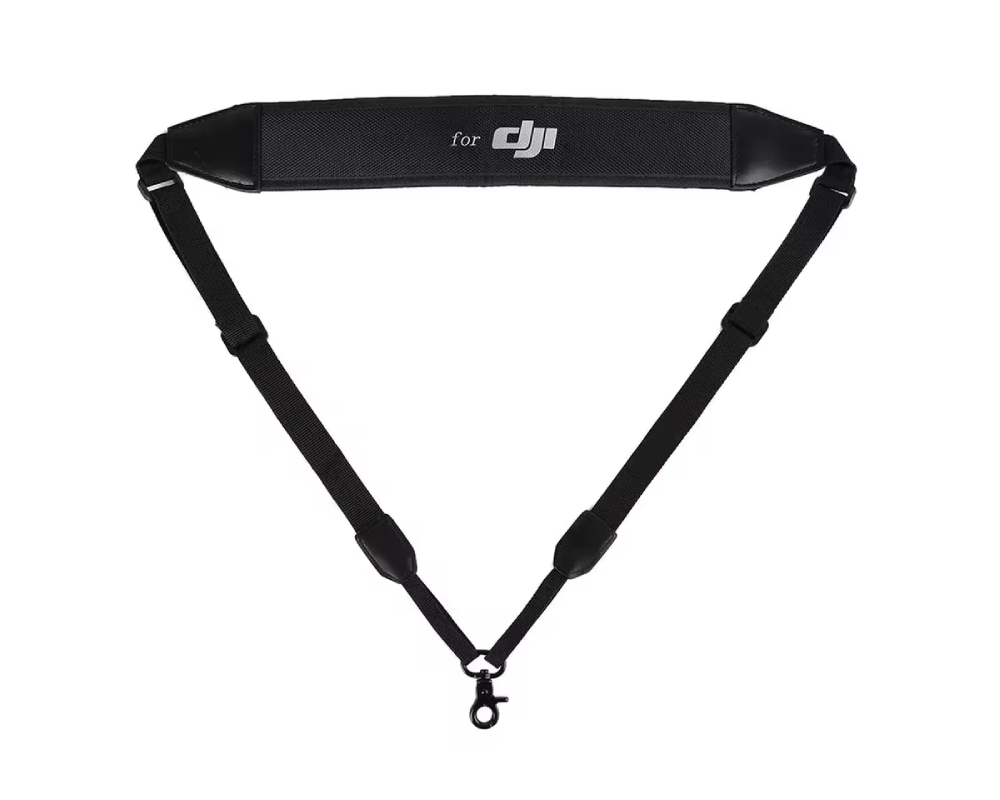
A controller lanyard seems trivial, but it quietly solves a lot of real problems. Being able to let the controller hang from your neck means you can free both hands instantly—wipe your glasses, answer a client’s message, swap a battery, or warm your fingers—without risking the controller sliding off a rock or sinking into wet grass. It also reduces fatigue on longer flights; instead of gripping the controller constantly, the strap takes most of the weight so your hands stay steadier and more relaxed for precise inputs.
A Good Landing Pad
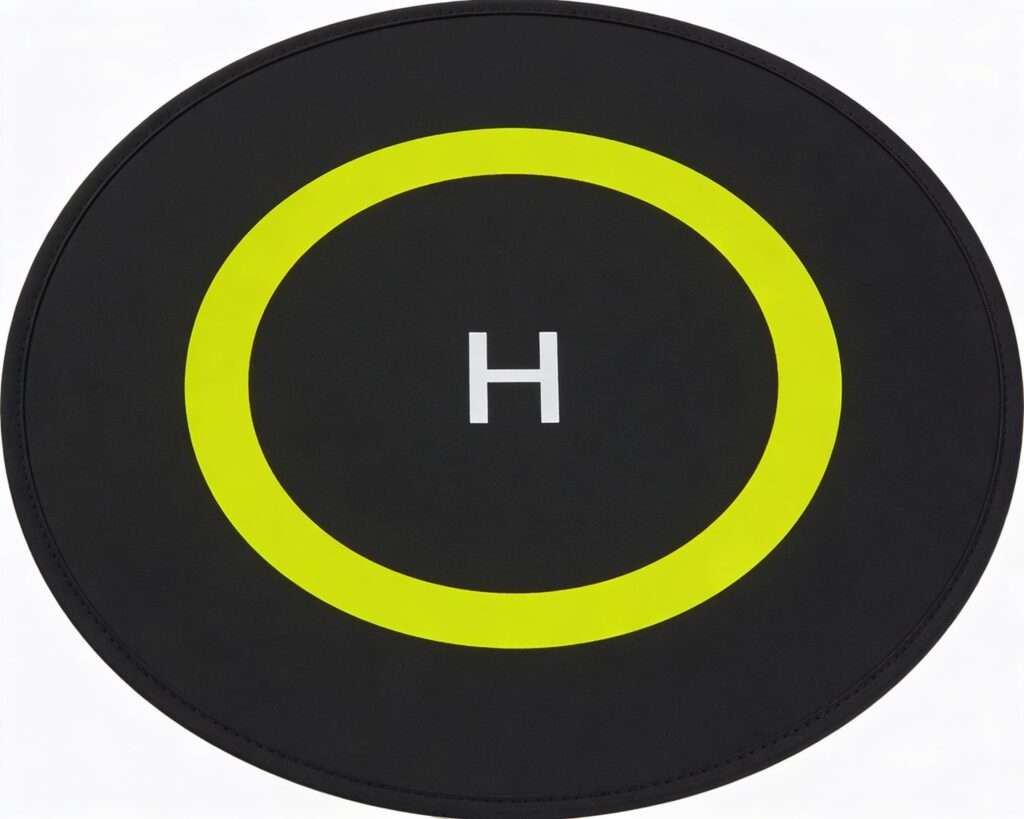
Protects gimbals from wet grass, sand, and dust that can clog motors during takeoff and landing. The high contrast surface helps vision sensors lock onto the exact spot for precise automated returns, even in low light or cluttered terrain. Packs down small and sets up in seconds.
Conclusion: The Pilot Matters More Than the Plane
The best drone for photography in 2026 isn’t necessarily the most expensive one – it’s the one that fits your workflow.
If you are hiking the Alps, the Mini 4 Pro is your best friend. If you are delivering high-end commercials, the Mavic 3 Pro is the tool of the trade. And for most of us in the middle? The Air 3S is the versatile workhorse that just works.
Investing in a drone is investing in a new perspective. But remember: a €3,000 drone won’t fix bad composition. The real investment is in learning how to see the world from above.
Related deep-dives
Use these guides as “choose your next step” depending on where you are right now:
-
If you want the best drone you can buy on a tight budget, read Best Drones Under 500 Euro (2026)
-
If you want a drone specifically for property work (portfolios, client jobs, deliverables), read Best Drones for Real Estate Photography
-
If you’re considering a lightweight travel drone and want the full pros/cons breakdown, read DJI Mini 5 Pro Review (2026)
-
If you want to fly safer, smoother, and more confidently (and upgrade your footage fast), start with Drone Flying Tutorial: Beginner to Confident Pilot
- If you’re just starting out and want the safest, easiest drone to buy first, read Best Drones for Beginners (2026): Safe, Easy Picks + Buying Guide
Dipon is a drone and timelapse cinematographer based in Ulm, Germany, with over 15 years of experience turning real spaces and projects into cinematic visuals. With a background in digital marketing, every shot is planned with a clear purpose — where it will appear, who will see it, and what it should help them decide.
You May Also Like

The Complete Drone Videography Guide (2026)
Best ND Filters for Timelapse: Strength Guide & Picks

Best Drones Under 300 Euro 2026: Entry-Level Options That Actually Deliver
Manual Drone Camera Settings: ISO, Shutter, Aperture Explained
Drone Pre-flight Checklist for Beginners: Safety System for Confident Flights
Drone Flying Tutorial : Beginner to Confident Pilot
Best Drones for Beginners (2026): Safe, Easy Picks + Buying Guide
Best Drones Under 500 Euro (2026) – Top 6 Budget Camera Drones

Best Drones for Real Estate Photography
DJI Mini 5 Pro Review (2026): The Ultimate Travel Drone?
Need help capturing aerials for your next project but not ready to invest in the gear yet? Check out our Drone Videography to see how Aero Timelapse Studio can help elevate your production.